What Sendai is known for eating
Three things carry Sendai's name — grilled beef tongue, sweet edamame paste and bamboo-leaf fish cake — and a fourth, the seafood, is really borrowed from Shiogama and Matsushima next door. Two of the stories everyone repeats are not documented.
The short answer
Eat gyutan as a set rather than a la carte, expect zunda to be a dessert, and go to Shiogama if you want the fish. Everything here is a category, not a recommendation — this site does not review restaurants.
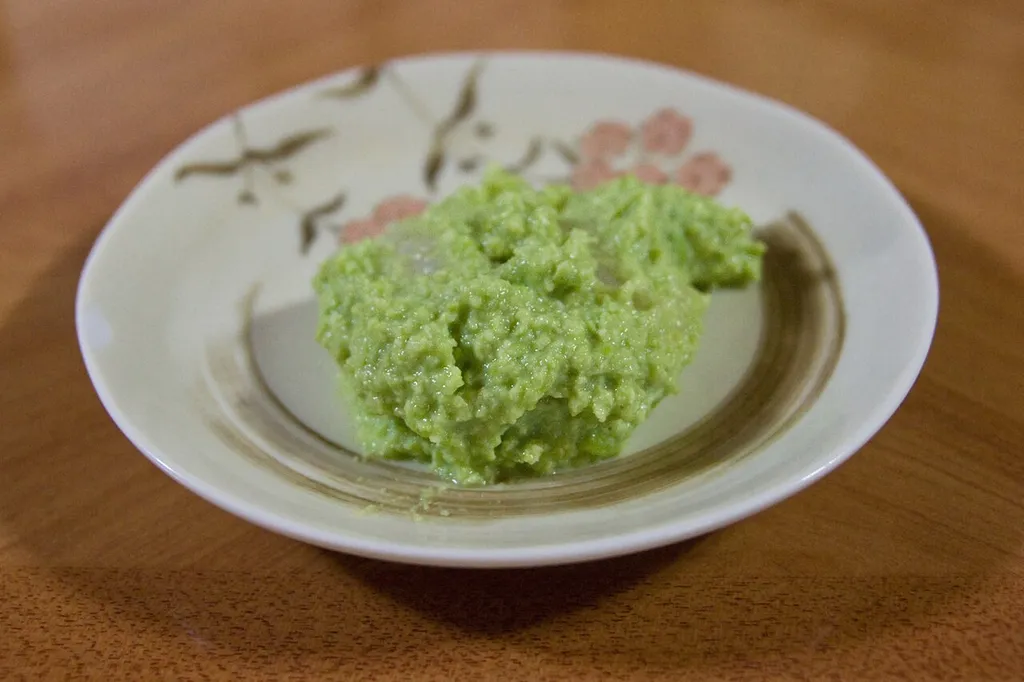 Photo: Σ64 CC BY 4.0 · cropped
 This page contains affiliate links
Quick comparison
| Option | Best for | Trade-off |
|---|---|---|
| Gyutan | The one dish to eat if you eat only one. Nationally recognised as Sendai's. | A set meal built around a single ingredient. Little for anyone avoiding beef. |
| Zunda | A sweet, and a very easy souvenir. Available all year now. | People see edamame and expect savoury. It is sugar and a pinch of salt. |
| Sasa-kamaboko | Eating on the move, and taking home. Grilled white-fish cake, keeps well. | Mild. It is a snack with a good story rather than a meal. |
| Shiogama seafood | A half-day trip that ends in a seafood bowl you assembled yourself. | Not in Sendai. About 35 minutes out, and the good market keeps market hours. |
On this page
Sendai’s food identity is three dishes and a borrowed coastline. This page explains what they are and where the categories are, so you can choose for yourself — we do not review restaurants and there are no recommendations here.
Gyutan
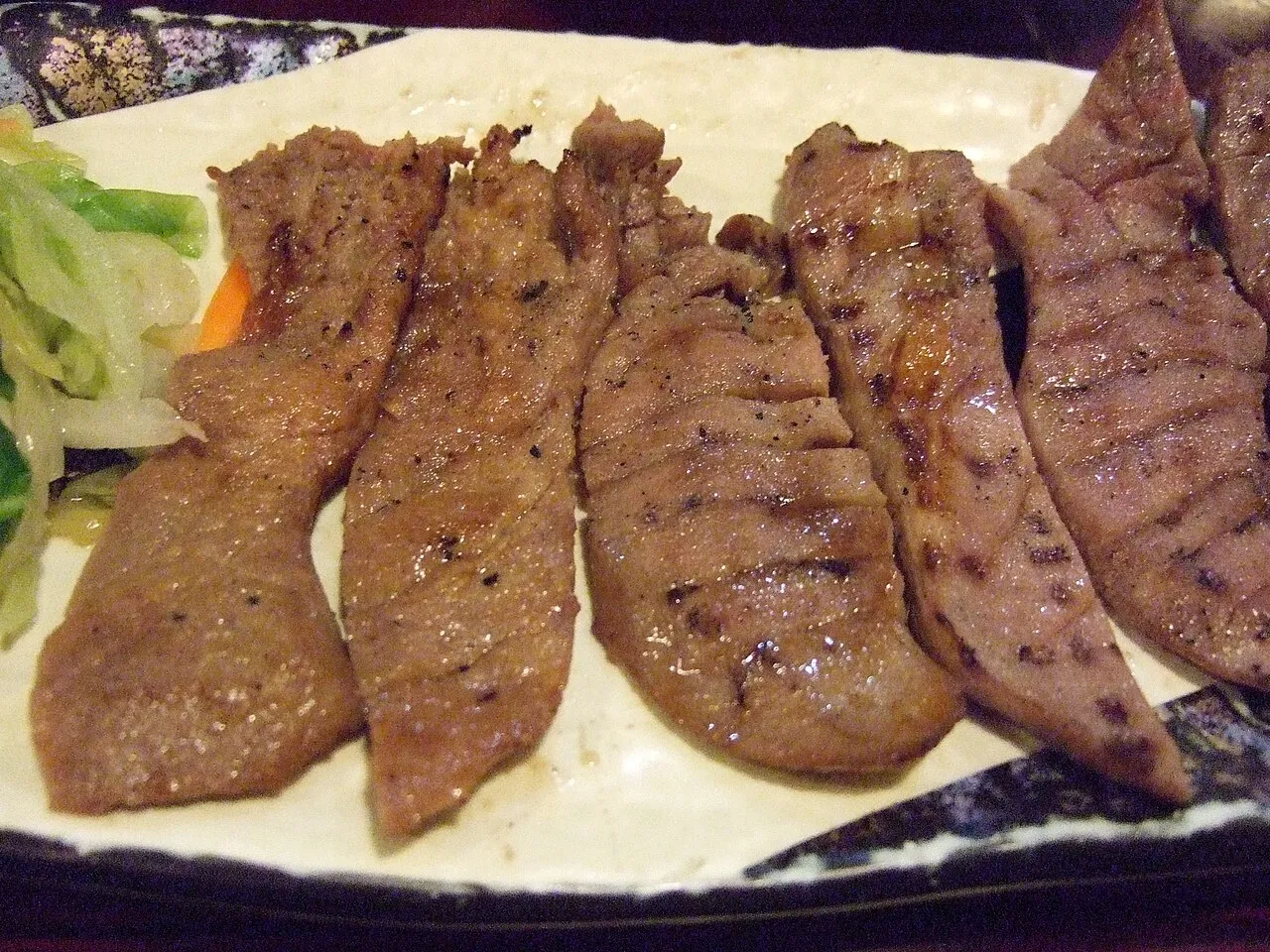
Grilled beef tongue is the dish Sendai is known for nationally. Japan’s Agency for Cultural Affairs certified Sendai gyutan-yaki under its 100-Year Food programme in the 2025 financial year, describing it as born in the late 1940s when a local restaurateur repeatedly experimented, looking for a way to make beef tongue good to eat (Agency for Cultural Affairs, checked 2 August 2026).
The trade association credits Sano Keishiro, a chef from Yamagata, who opened in Ichibancho and arrived at a salt-seasoned preparation: hand-salted, aged three to four days under refrigeration, then grilled fast over charcoal (Sendai Gyutan Promotion Association, checked 2 August 2026). The dish spread nationally after the Tohoku Shinkansen opened in 1982, carried by business travellers.
About the origin story you have probably read. English-language travel writing almost always says gyutan began because American occupation forces discarded the tongues. That explanation appears in neither the government’s account nor the trade association’s. Japanese Wikipedia introduces it explicitly as “there is a story that…”. It may be true; it is not documented, and we would rather say so than repeat it.
What arrives. A tray, not a plate: sliced grilled tongue, barley-flecked rice, a clear oxtail soup, pickles, usually a small mound of chilli-miso. What varies between places is the seasoning — salt, miso or soy — and the thickness of the cut. Note that this composition is observed convention rather than an officially defined standard; neither the government nor the association writes it down.
Zunda
Boiled edamame with the thin skins removed, mashed, then mixed with sugar and a little salt to make a sweet paste (Ministry of Agriculture, Forestry and Fisheries, checked 2 August 2026). It is a dessert. People see “edamame” and brace for something savoury.
It used to be a July-to-September food, because that was when the beans were there. Automatic pod-shelling machinery and freezing changed that, and it is now available year round — which is why it can feel ceremonial in one setting and like an airport sweet in another. Traditionally it belonged to occasions: New Year, weddings, memorial services, funerals.
The name. Three explanations circulate, and both the Ministry and Miyagi Prefecture present all of them as theories: a farmer named Jinta; Date Masamune crushing beans with a sword hilt; or simply mame-uchi, bean-pounding. Miyagi’s own site goes as far as “might have been” about the Masamune version and offers the nicest reading of the confusion — that a dish accumulates origin stories by being loved for a long time (Miyagi Prefecture, checked 2 August 2026).
Sasa-kamaboko
A grilled cake of white fish paste, shaped like a bamboo leaf. It comes from the Meiji period, when Miyagi’s ports — Kesennuma, Ishinomaki, Shiogama, Yuriage — were landing more fish than could be kept without refrigeration, and the surplus was turned into surimi, hand-shaped and grilled to preserve it (Ministry of Agriculture, Forestry and Fisheries, checked 2 August 2026).
The name comes from the shape’s resemblance to the bamboo leaf in the “bamboo and sparrows” crest of Date Masamune, first lord of the Sendai domain. It was standardised as sasa-kamaboko during the Showa era; before that it went by names meaning tongue-, leaf- and palm-kamaboko.
It is not a protected designation — we could find no JAS standard or geographical indication for it.
The seafood is next door
Sendai’s seafood identity is largely borrowed from Shiogama and Matsushima, and the two Shiogama markets are not the same place.
Shiogama Seafood Wholesale Market is open to the public, who can buy at wholesale prices across a 4,950 m² floor. Its own “My Kaisen-don” system is the reason to go: browse the stalls for marked toppings, buy a rice-and-bowl set at stall 6, and assemble your own seafood bowl (the market, checked 2 August 2026). Take the JR Senseki Line from Sendai to Higashi-Shiogama, then walk 15 minutes.
Shiogama City Fish Market is a different address, where you can watch the auction from a second-floor corridor — but only on days when a boat has landed, and landings are irregular.
Shiogama’s waters sit where the Oyashio and Kuroshio currents converge. The city claims first place in Japan for fresh bigeye tuna landings, and Fisheries Agency data reported for 2022 put it first nationally for both fresh bluefin (1,491 t) and bigeye (782 t). We would not write that in the present tense without a fresh check — 2022 is the most recent figure we could verify.
Matsushima means oysters. Oyster aquaculture accounts for over 70% of both catch volume and sales value in Matsushima Bay, and raft farming there dates to around 1926 (Matsushima Town, checked 2 August 2026). Miyagi is second nationally for cultivated oysters, after Hiroshima.
In the city itself, Sendai Asaichi — “Sendai’s kitchen” — is five minutes’ walk from the station and is one of the eight shopping streets Sendai City lists officially.
Sake, briefly
Miyagi’s sake identity is specific and documented. In November 1986 the prefecture’s brewers association collectively declared for junmai brewing using Miyagi-grown rice. The association states that over 90% of Miyagi’s sake is now in the premium designated grades, against a national average of around 40% (Miyagi Prefecture Sake Brewers Association, checked 2 August 2026). The prefecture also has its own sake rice, Kura no Hana, bred from Yamada-Nishiki in the 1990s to survive Tohoku winters.
The association’s percentages carry no “as of” date, so read them as the association’s claim rather than a current measurement.
The one most guides miss
Sendai seri — Japanese parsley — is the only Sendai food here with a formal legal designation, registered as a Geographical Indication in March 2024. The register notes that seri-nabe, in which the roots are eaten whole, has recently become a Sendai speciality (Ministry of Agriculture, Forestry and Fisheries, checked 2 August 2026). It is a winter dish, and a useful counterweight to three things that are available all year.
Where to go looking
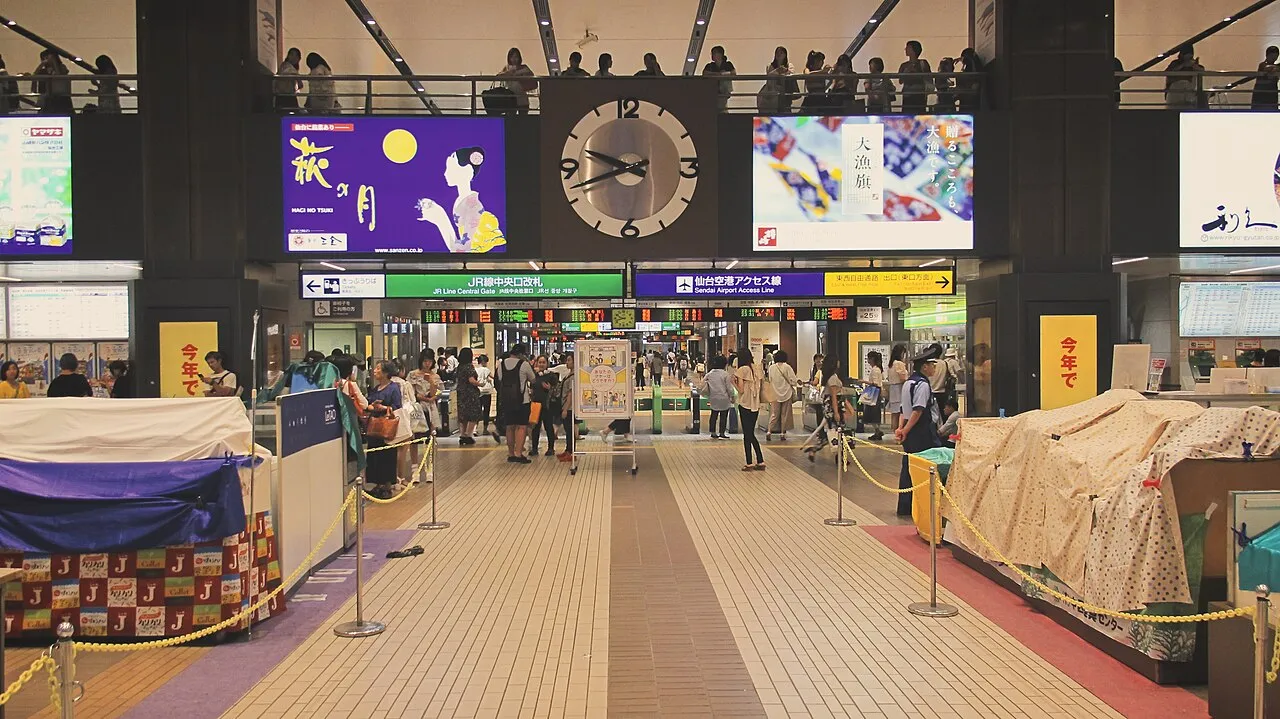
The station’s third floor has dedicated gyutan and sushi lanes, open roughly 10:00 to 22:30, with a zunda area that opens earlier at 08:00 and closes by 21:30 (Sendai Terminal Building, checked 2 August 2026).
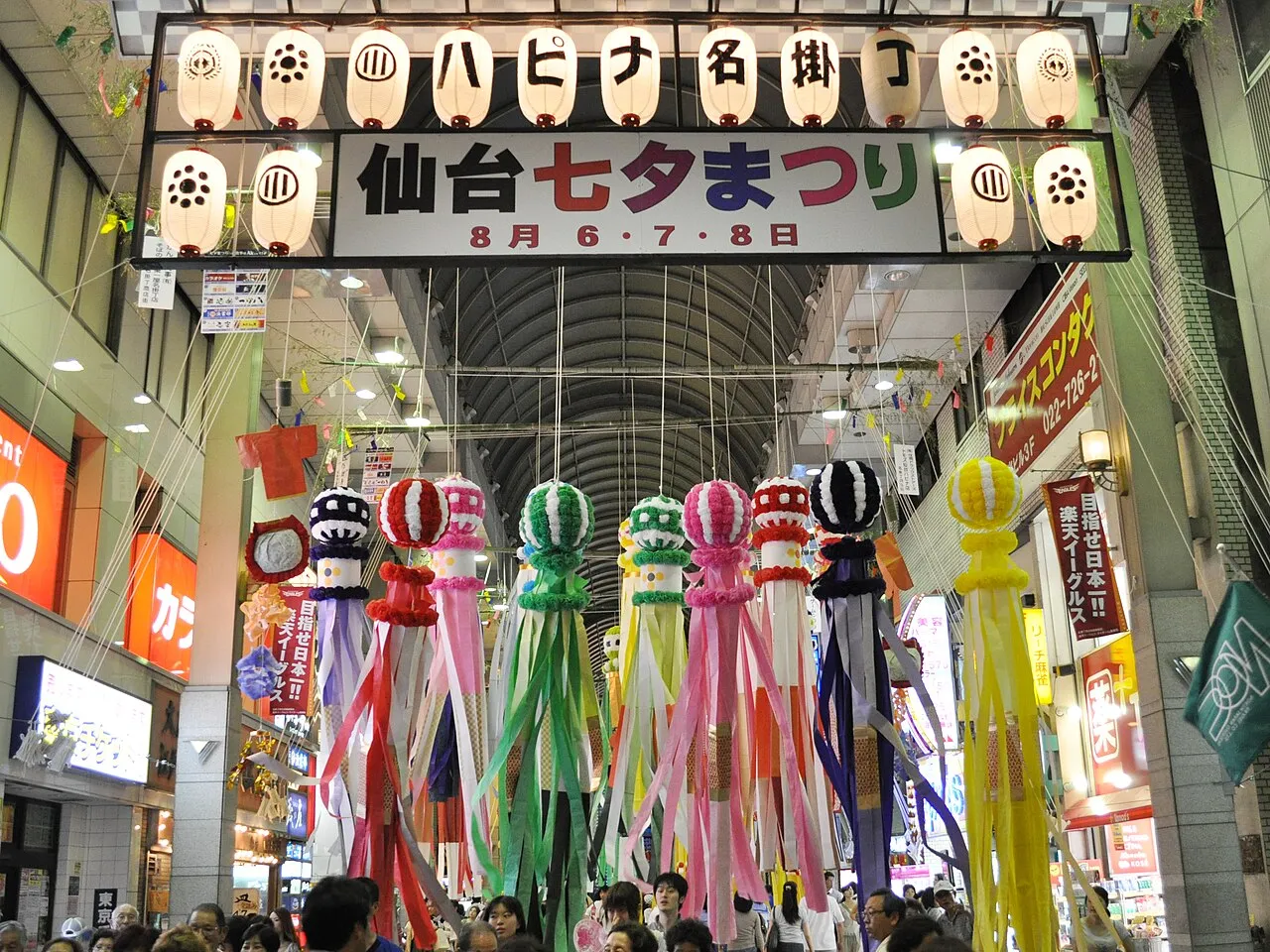
The arcades are daytime shopping streets and, being covered, they stay busy through rain and through the summer — very crowded at weekends and during Tanabata. Kokubuncho, which Sendai City tourism describes as Tohoku’s foremost entertainment district, is the opposite: an evening place, quiet by day.
If the categories make sense but the Japanese on a menu does not, use the Japanese menu decoder. It translates common ordering terms while deliberately leaving ingredient and allergen questions to the restaurant.
If you would rather explore the food districts with a local guide than choose stops from a list, browse the separately operated options. Use each live listing for availability, dietary limits, inclusions and booking terms.
Browse food toursThis is an affiliate link. If you book through it, the site may earn a commission.
Common questions
Is the story about occupation troops and beef tongue true?
Is zunda sweet?
Does Shiogama really have the most sushi restaurants per head in Japan?
- #food
- #gyutan
- #zunda
- #seafood
- #sendai
Checked on 2 August 2026 against Agency for Cultural Affairs, 100-Year Food programme (Miyagi). Check the official source linked on this page before you travel. How we handle data is explained in the accuracy policy.