How to order gyutan in Sendai
This page carries no fares, times or opening hours yet. Everything above is safe to act on; anything numeric, check against the official source linked below.
Order the set rather than the meat alone, pick thick cut for your first time, and go at an off-peak hour if you are on your own. The tail soup that comes with the set is not a garnish — it is half the reason the dish is built the way it is.
The short answer
Gyutan in Sendai is a set meal, not a barbecue course. Ordering it as a set is both cheaper and closer to how it is meant to be eaten.
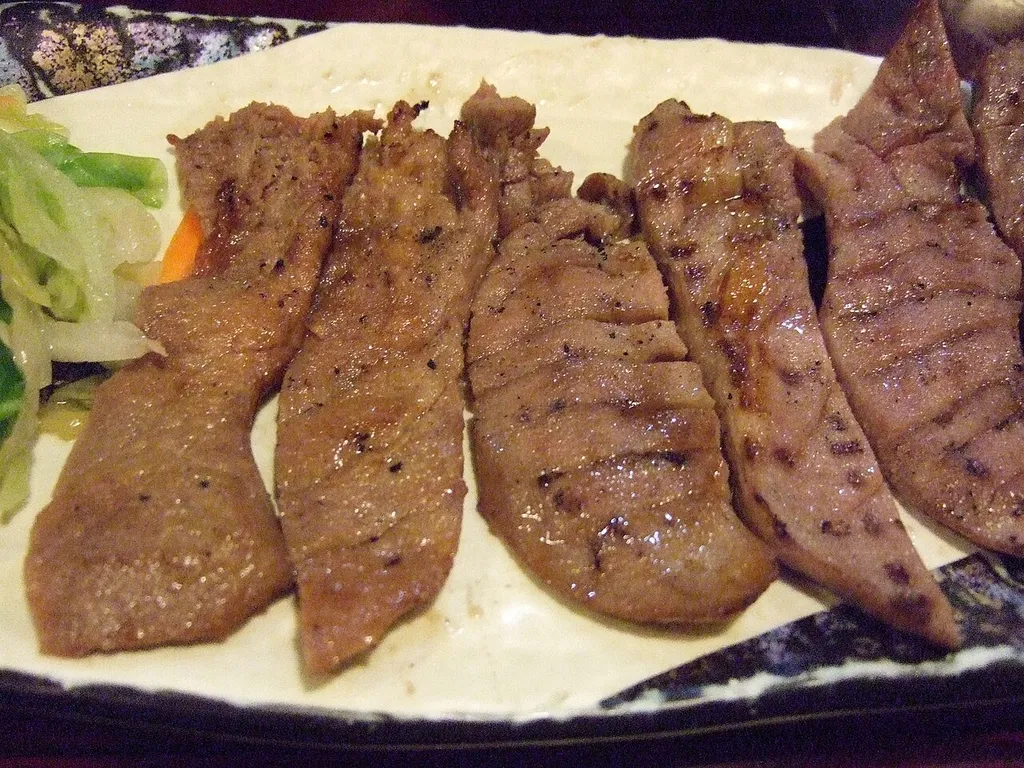 Photo: Sakurai Midori CC BY-SA 3.0 · cropped
 Quick comparison
| Option | Best for | Trade-off |
|---|---|---|
| Thick cut | A first visit. Chewy, beefy, unmistakably the thing Sendai is known for. | Genuinely a workout to chew. Some people find it too much. |
| Thin cut | Anyone who wants it tender, or a lighter meal. | Much closer to grilled beef you have had elsewhere. Less distinctive. |
| Mixed set | Two people who want to compare without ordering two full sets. | Not on every menu, and you get less of whichever one you prefer. |
On this page
Gyutan restaurants in Sendai are not barbecue restaurants. You are not cooking anything. A set arrives: grilled tongue, barley rice, oxtail soup, pickles. That combination is the dish, and ordering the meat on its own is the most common way visitors end up with a worse and more expensive meal.
Order the set
The set exists because the parts work together. The soup cuts the richness, the barley rice is deliberately plainer than white rice, the pickles reset your palate between pieces. Ordering tongue à la carte gives you the most intense element with none of the things that balance it.
If a menu offers a set and an à la carte portion, the set is almost always the better deal as well.
Thick cut or thin cut
This is the only real decision on the menu.
Thick cut is what people mean when they talk about Sendai gyutan. It has serious chew and a deep beef flavour, and it is the version worth travelling for. It is also genuinely hard work to eat, and not everyone enjoys that.
Thin cut is tender and much easier going. It is a good meal. It also tastes considerably more like grilled beef you could get in a lot of places.
Queues, and eating alone
The well-known places have queues at obvious times. If your schedule allows, going either side of the standard lunch and dinner rush changes the experience completely — often from a long wait to walking straight in.
Eating alone is entirely normal here. Counter seating is the default, single sets are on every menu, and nobody will think anything of it. If you are travelling solo and hesitating about which restaurant to attempt on your own, this is an easy one.
What to expect on the table
- Grilled tongue, salted rather than sauced at most places
- Barley rice, refillable at many of them
- Oxtail soup, which is part of the meal and not a side
- Pickled vegetables, usually including a chilli-pickled one worth trying
Eat a piece of tongue, a mouthful of rice, a spoon of soup, repeat. That rhythm is the point of the set.
Common questions
Is gyutan a barbecue you cook yourself?
Can I eat it alone?
What if I do not eat beef?
- #food
- #gyutan
- #sendai
No figure on this page has been checked yet. Sendai Tourism, Convention and International Association is the source to check against. Check the official source linked on this page before you travel. How we handle data is explained in the accuracy policy.